
Bone Grafting for Implants

Do I have enough bone for dental implants?
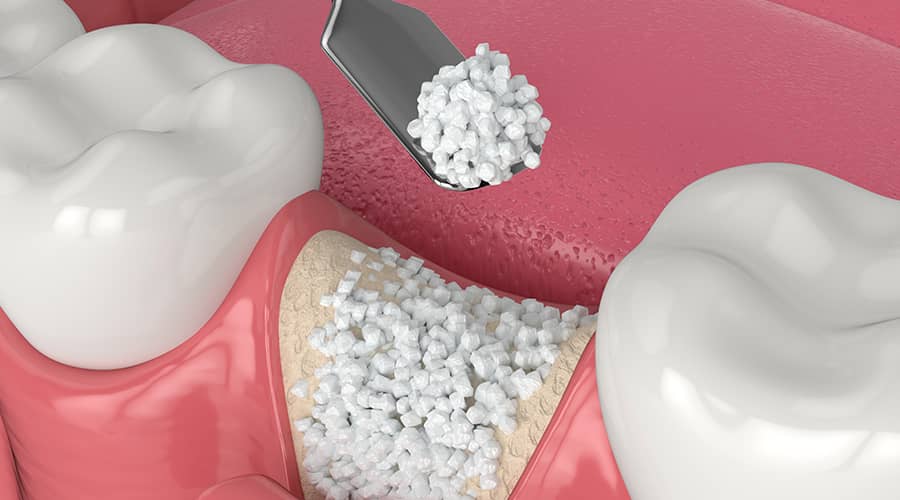
After a tooth is removed, the bone in the socket can naturally regenerate, particularly when the socket walls are thick. This healing process typically takes two to three months. However, when socket walls are thin—especially in the front teeth—natural healing may not provide enough bone for future implants. In these cases, a bone graft is often placed at the time of extraction to preserve bone width and volume for later implant placement.
When a tooth has been missing for years, the ridge of bone can become very narrow. In these instances, a graft may be added to the area and allowed to heal for several months. Once the new bone integrates, the site can support an implant. This is typically an outpatient procedure that’s well tolerated. A variety of grafting materials, including the patient’s own bone, may be used.
Bone grafting may also be needed when the sinus cavities in the upper jaw expand into the area where teeth were removed long ago. In these situations, there may not be enough bone height to place implants safely. A sinus lift may be performed under local anesthesia, sometimes alongside implant placement. This involves gently lifting the sinus membrane and placing bone to increase vertical support, making room for an appropriately sized implant.