
About Bone Grafting

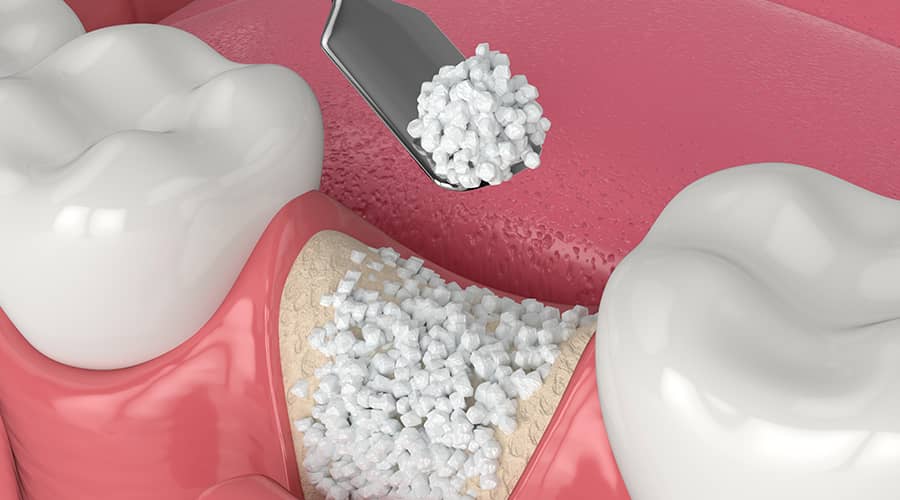
Bone Graft Materials and Techniques
What is Bone Grafting?
When teeth are missing, the jawbone beneath them may shrink over time due to lack of stimulation. This bone loss can result in a jaw that lacks the strength or size needed for dental implant placement. Bone grafting is a technique used to restore or increase bone where it’s deficient, making it possible to place implants and restore both function and appearance.
Types of Bone Grafts
Autogenous Bone Grafts
Also called autografts, these are taken from your own body, typically the chin, jaw, leg, hip, or skull. Because the graft is made from your own living bone, it promotes natural bone growth and is fully biocompatible. However, a second procedure is needed to harvest the bone, which may not be ideal for every patient.
Allogenic Bone
Allografts come from human donors. The bone is processed and freeze-dried to ensure safety. It doesn’t contain living cells, so it serves as a scaffold for your own bone to grow into, rather than generating new bone on its own.
Xenogenic Bone
Derived from non-human sources (usually bovine), xenografts are heat-treated to remove potential contaminants. Like allografts, they support the growth of new bone from surrounding tissue but do not actively stimulate it.
Allogenic and xenogenic grafts don’t require harvesting bone from the patient, which avoids a second procedure. However, they typically take longer to integrate and may have slightly less predictable results than autografts.
Bone Graft Substitutes
Several synthetic alternatives to natural bone are safe and effective, offering additional treatment options:
Demineralized Bone Matrix (DBM)/Demineralized Freeze-Dried Bone Allograft (DFDBA)
Derived from processed donor bone, DBM contains proteins and collagen that help support bone regeneration. It is available as powder, chips, or gel.
Graft Composites
These blend materials like DBM, collagen, ceramics, or even autograft bone to enhance both structural support and biological activity.
Bone Morphogenetic Proteins (BMPs)
BMPs are naturally occurring proteins that help regulate bone formation. In grafting procedures, they may be added to stimulate bone growth at the graft site.
Synthetic and composite materials reduce the need for bone harvesting, minimizing risk and discomfort. Each option has its pros and cons. Your oral surgeon will evaluate your specific needs to recommend the best grafting material for your treatment plan.