Anesthesia

Comfort-Focused Sedation Options for Every Patient
Anesthesia Options
-
MethodDescription of TechniqueUsual Indications
-
Local AnestheticThe patient remains awake. A local anesthetic (e.g., lidocaine) is injected in the treatment area to block sensation. Often combined with other sedation methods.Minor oral surgeries like soft tissue procedures and simple tooth extractions.
-
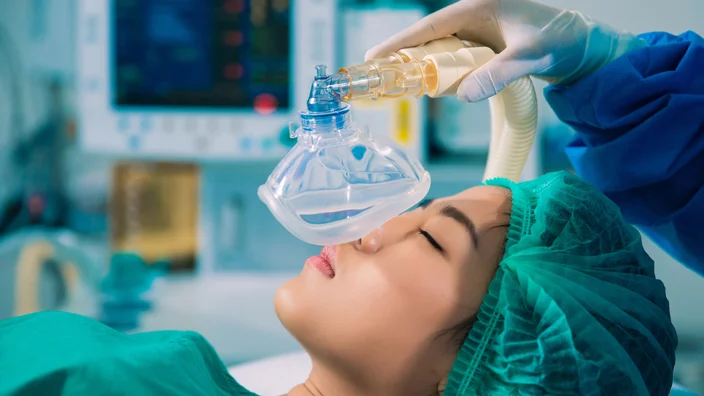
Nitrous Oxide Sedation with Local AnestheticNitrous oxide (laughing gas) and oxygen are inhaled through a nasal mask. The patient remains conscious but relaxed.Procedures ranging from simple extractions to wisdom teeth removal and implants.
-
IV Sedation/Office-Based General AnesthesiaMedications like Versed and Fentanyl are administered via IV. The patient sleeps lightly or deeply and is unaware of the procedure. Vital signs are monitored throughout.Often chosen for moderate to advanced procedures such as multiple extractions or implant placements.
-
Hospital-Based General AnesthesiaAdministered by an anesthesiologist in a hospital or surgical center for more extensive procedures.Used for jaw reconstruction, TMJ surgery, or patients with complex medical conditions.
To provide general anesthesia in-office, oral surgeons undergo extensive hospital-based anesthesia training and must pass a state board evaluation. They are required to maintain up-to-date equipment and complete continuing education in anesthesia safety every two years.
Intravenous Sedation (“Twilight Sedation”)
This sedation method allows patients to remain in a deeply relaxed state throughout their procedure, often with no memory of the experience. Administered and monitored in-office by your surgeon, it avoids the need for a hospital setting. A small IV is placed in the arm or hand, and medications are adjusted as needed for maximum comfort.
Patients may drift in and out of sleep and still respond to verbal cues. IV sedation is considered very safe and allows for quick reversal if needed.
Nitrous Oxide (Laughing Gas)
Nitrous oxide is a safe, commonly used sedative inhaled through a mask. It relaxes patients within minutes and has minimal side effects. The sedation level is easily adjusted, and it wears off quickly, often allowing patients to drive themselves home afterward.
Advantages of Nitrous Oxide
- Rapid onset and quick recovery
- Minimal side effects
- Effective at reducing anxiety and gag reflex
- Can be used alone or with local anesthetic
When Nitrous Oxide May Not Be Recommended
Patients with respiratory issues such as emphysema, colds, or multiple sclerosis may not be suitable candidates. A short trial may help determine tolerance and comfort with this method.
Your safety and comfort are our top priorities. Please don’t hesitate to ask your doctor about any aspect of your anesthesia plan during your consultation.