
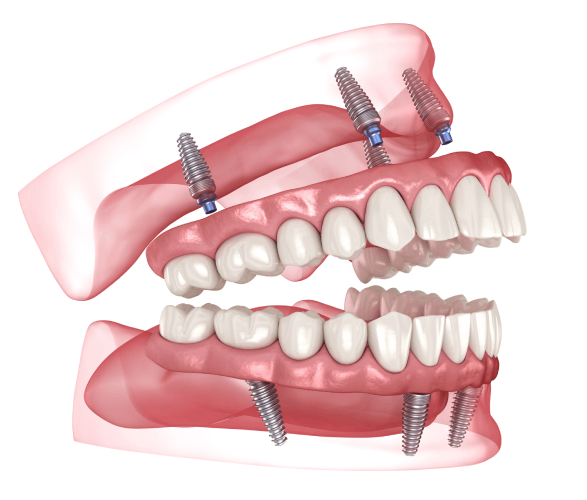
In this option, four to six implants are placed, depending on the shape and size of your jaw. These implants are joined with a custom-fitted bar, and the denture clips securely onto it. This solution offers more stability and reduced movement. The denture can be removed for cleaning and routine care.
This option places five or more implants into the jaw, supporting a denture that is screwed into place. It does not rest on the gums, which makes cleaning possible without removing the denture. While it requires more attention to hygiene and hand dexterity, it provides a fixed, durable solution that stays in place except during professional cleanings.
This most natural-looking option involves placing eight or more implants, each supporting a crown that mimics the appearance of real teeth. The crowns may be connected for added strength and to accommodate procedures such as sinus grafting. This method offers the highest level of function and aesthetics but also comes with a higher cost and greater structural requirements.
Upper jaw restoration includes many of the same options, but usually requires more implants due to softer bone density. Each method offers varying levels of comfort and permanence.
With enough implants, you may be able to avoid having your palate covered by the denture. This improves taste, temperature sensitivity, and overall comfort. The denture remains removable for easy maintenance of both the denture and support bar.
For a fully fixed solution that feels and looks like natural teeth, eight to ten implants are typically required. Once healed, abutments and custom crowns are placed to restore your smile with a permanent, natural-looking result.