
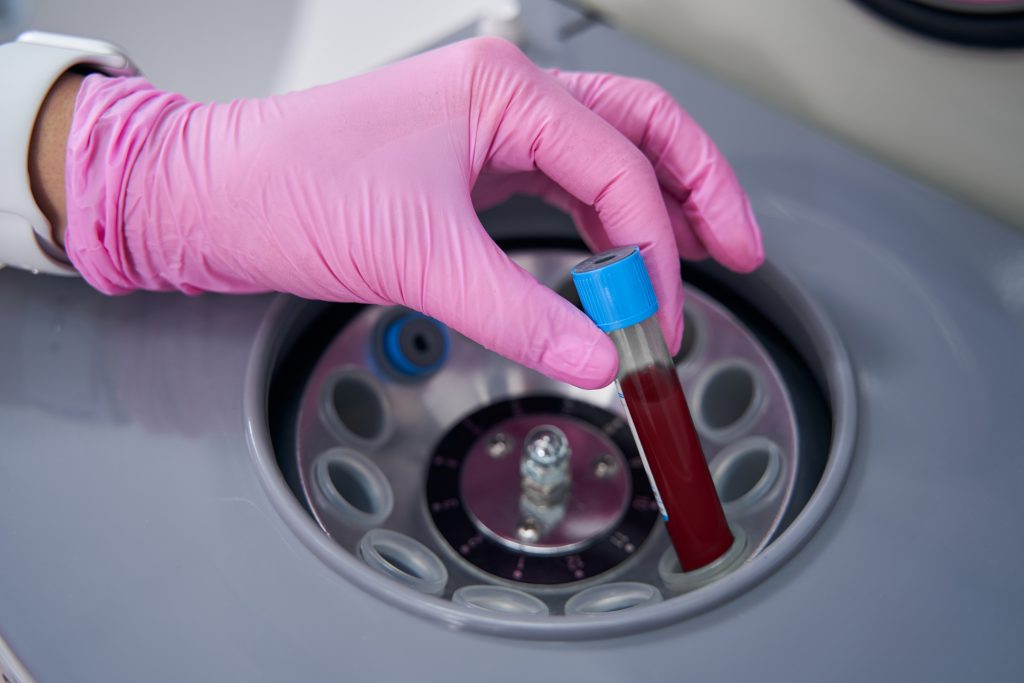
Platelet Rich Plasma
Platelet Rich Plasma (PRP) is an advanced regenerative therapy derived from your own blood, designed to accelerate healing after oral surgery. It enhances tissue repair by delivering a concentrated dose of your body’s natural growth factors directly to the treatment site—leading to faster recovery and improved outcomes.
Faster Healing with Platelet Rich Plasma
PRP uses your body’s own platelets—cells that play a key role in wound healing—to boost tissue regeneration following procedures such as bone grafting, sinus lifts, or extractions. Harvested conveniently during surgery, this treatment promotes faster recovery and supports long-term surgical success.
Platelets play a central role in wound healing by releasing growth factors that activate stem cells and stimulate tissue regeneration. PRP amplifies this process by delivering a concentrated dose of platelets directly to the surgical site. The result is faster tissue repair, reduced inflammation, and improved outcomes for bone and soft tissue healing.

Applications of PRP in Oral Surgery

PRP is commonly used in conjunction with bone grafts and dental implant procedures to improve healing and bone growth. Applications include:

  • Bone grafting for dental implants
  • Sinus lift surgery
  • Ridge augmentation
  • Repair of cleft lip and palate
  • Healing after tooth extractions or cyst removal
  • Closure of fistulas between the mouth and sinus cavity

Advantages of PRP

  • Safe: PRP is made from your own blood, eliminating the risk of disease transmission.
  • Convenient: Collected and prepared during your surgical visit—no hospital visit required.
  • Faster Recovery: Enhanced healing leads to less discomfort and quicker return to normal function.
  • Cost Effective: Performed in-office, PRP reduces the need for costly hospital-based procedures.
  • Improved Handling: PRP makes bone graft materials more gel-like and easier to apply.

Frequently Asked Questions

Is PRP safe? Yes. A small amount of your blood is processed during surgery to isolate the platelet-rich plasma. The entire process takes less than 15 minutes.

Is PRP used in every bone grafting case? Not always. While beneficial in most cases, your surgeon will determine if PRP will enhance your particular procedure.

Is PRP covered by insurance? Typically, no. The procedure costs around $400 and is paid out-of-pocket.

Can PRP be used alone? No. PRP must be combined with bone graft material—either your own bone, donor bone, or a synthetic product—to promote bone growth.

Are there any contraindications? Patients with certain blood or bleeding disorders may not be candidates. Your surgeon will assess your suitability based on your health history.

To learn if PRP is right for your treatment plan, contact our office at [PHONE] to schedule a consultation.