

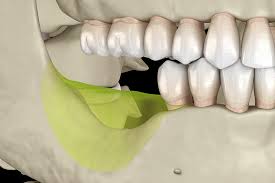
Unanchored dentures rest on the gums and do not stimulate the bone, which leads to gradual bone loss. Some anchored dentures help preserve bone better. Bridge-supported teeth stimulate only the areas adjacent to the missing teeth, leaving the bone beneath the gap unstimulated.
Trauma from injury or accidents that cause tooth loss or jaw fractures may halt bone stimulation, leading to deterioration. A bone graft may restore these areas.
Teeth without opposing contact may over-erupt, affecting the underlying bone. TMJ disorders, abnormal wear, and untreated issues can also lead to uneven forces, reducing stimulation and resulting in bone loss.
This bacterial bone infection can reduce blood supply to the jaw. Treatment usually includes antibiotics and surgical removal of affected bone, followed by bone grafting if needed.
Both benign and malignant facial tumors may require removal of jaw sections. Reconstructive bone grafting is often needed to restore function after tumor treatment.
Congenital conditions may result in underdeveloped bone structures. In such cases, grafting can help reconstruct areas to improve function and support dental restorations.
When upper molars are lost, the supporting bone can resorb, and the sinus may expand. This results in insufficient bone for implants. A sinus lift can restore bone height and allow implant placement.
Phone: (918) 609-2020
Fax: (987) 654-3210