


Sinus Lift
- Home
- Procedure
- Sinus Lift
Understanding the Sinus Lift Procedure
What is a Sinus Lift?
Am I a Candidate for a Sinus Lift?
- Are missing multiple back teeth in the upper jaw
- Have experienced bone loss in the back of the upper jaw
- Were born with a condition that caused tooth or bone loss
- Need stable support for multiple dental implants
How is a Sinus Lift Performed?
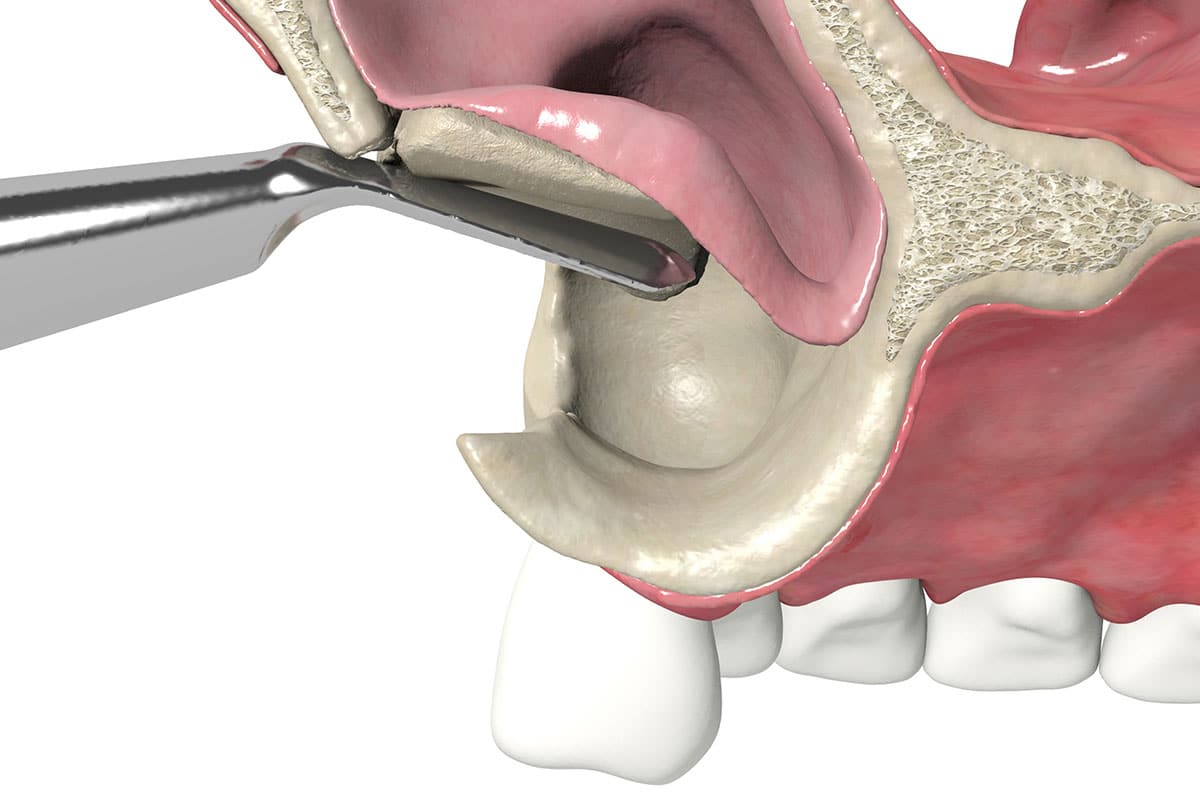
A small incision is made in the area of the upper molars or premolars to expose the bone. A window is created in the bone to access the sinus membrane, which is gently lifted. The space created is filled with bone graft material, which may come from your own body, a donor source, or synthetic alternatives. Once filled, the area is sutured, and the bone is left to heal and integrate.
Healing time varies based on the grafting material used and can take several months. Once healing is complete and the new bone has developed, dental implants can be placed securely into the grafted area.
In some cases, if sufficient bone remains to support the implant, the sinus lift and implant placement may be performed at the same time. Otherwise, the lift is done first and the implants placed once the graft has matured.
This procedure is typically performed in the surgeon’s office under local anesthesia. Oral or IV sedation is also available for comfort, depending on your preference and treatment needs.
A sinus lift enables many patients who were previously not candidates for implants to regain full function and stability with implant-supported restorations.