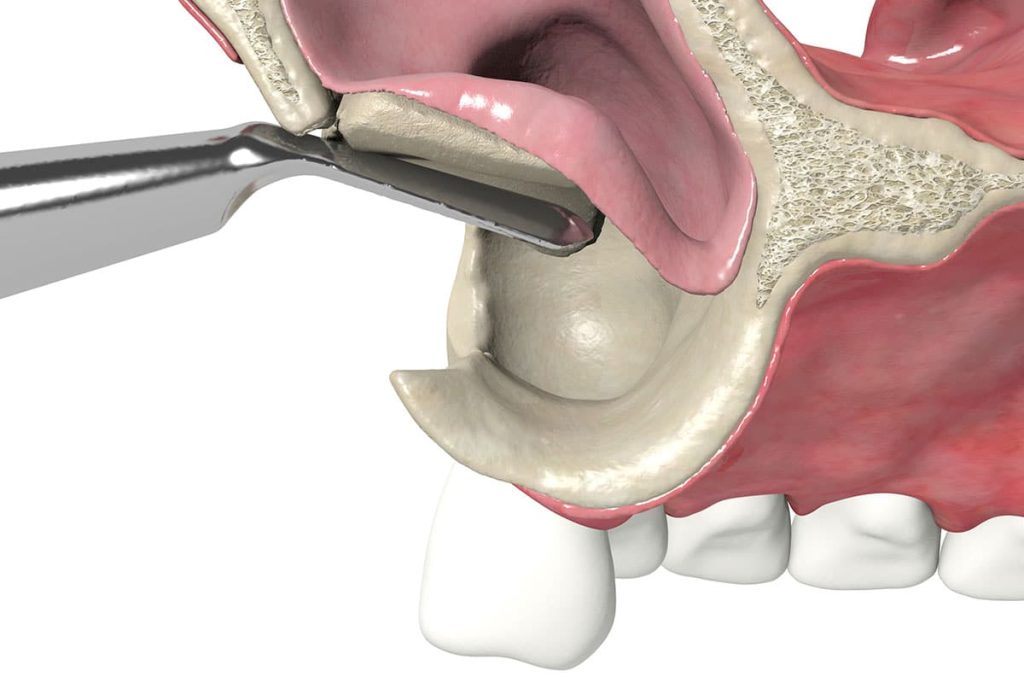
A small incision is made in the area of the upper molars or premolars to expose the bone. A window is created in the bone to access the sinus membrane, which is gently lifted. The space created is filled with bone graft material, which may come from your own body, a donor source, or synthetic alternatives. Once filled, the area is sutured, and the bone is left to heal and integrate.
Healing time varies based on the grafting material used and can take several months. Once healing is complete and the new bone has developed, dental implants can be placed securely into the grafted area.
In some cases, if sufficient bone remains to support the implant, the sinus lift and implant placement may be performed at the same time. Otherwise, the lift is done first and the implants placed once the graft has matured.
This procedure is typically performed in the surgeon’s office under local anesthesia. Oral or IV sedation is also available for comfort, depending on your preference and treatment needs.
A sinus lift enables many patients who were previously not candidates for implants to regain full function and stability with implant-supported restorations.
We’re deeply committed to keeping every patient well-informed about their full range of care options. That’s why we offer a variety of helpful resources to enhance and support your treatment journey.
At Riverside Oral & Maxillofacial Center, we offer a wide array of oral surgery treatments to patients throughout the Riverside area and nearby regions. Our goal is to enhance both the appearance and functionality of your smile. Led by board-certified oral surgeon Dr. Emily Carter, our skilled team performs advanced procedures including dental implants, full-arch restorations, wisdom tooth extractions, and more. We prioritize your safety and comfort with modern facilities, cutting-edge technology, and a dedicated on-site anesthesia team.