
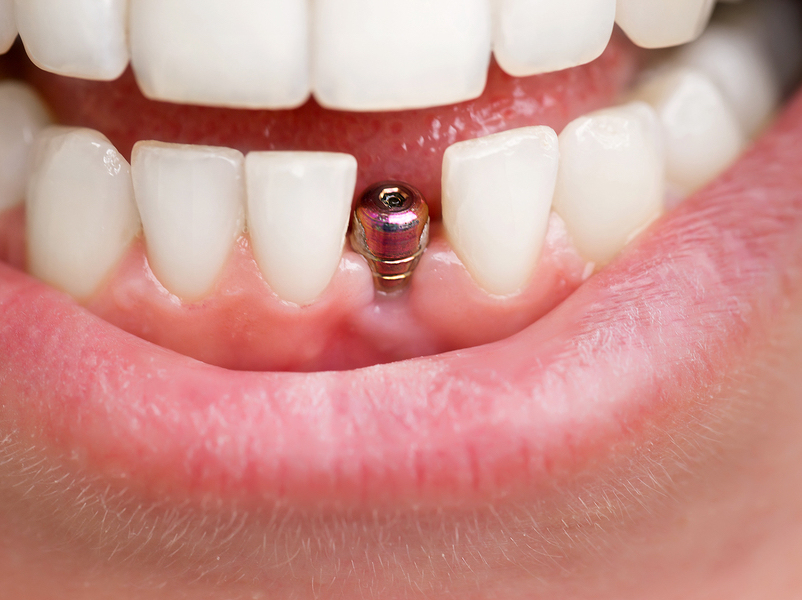
Following your dental implant procedure , it’s important not to disturb the surgical site. Refrain from rinsing, spitting, or touching the area on the day of surgery. You may notice a small metal healing post extending through the gum tissue.
Mild bleeding or pink saliva is expected for the first 24 hours. If bleeding becomes more pronounced—such as blood pooling in your mouth—bite firmly on a gauze pad placed over the site for 30 minutes. Contact our office if the bleeding does not slow down.
Some swelling is typical after oral surgery. To reduce it, apply an ice pack or a bag of ice wrapped in a cloth to the cheek near the surgical site. Use the ice as consistently as possible during the first 36 hours.
Stay hydrated and avoid hot foods and beverages. Stick to soft foods and liquids on the day of surgery. You may return to your regular diet when you feel comfortable, unless instructed otherwise.
Start taking pain medication as soon as the numbness from anesthesia wears off. For mild discomfort, take one or two Tylenol or Extra Strength Tylenol every 3–4 hours. Alternatively, you can take 2–3 tablets of 200 mg Ibuprofen (Advil or Motrin) every 6 hours, not exceeding 3200 mg in 24 hours for adults. Do not mix Tylenol and Ibuprofen, and consult our office for pediatric dosages. Avoid driving, operating machinery, or consuming alcohol while taking prescription pain medication. If pain worsens instead of improving, contact our office.
If antibiotics were prescribed, take them exactly as directed to minimize the risk of infection.
Cleanliness is essential for healing. On the evening of your procedure, use the prescribed Peridex mouth rinse before bed. Starting the day after surgery, continue using Peridex twice daily—after breakfast and before bedtime—rinsing for 30 seconds each time. Also, rinse with warm salt water (1 teaspoon salt per cup of warm water) 4–5 times per day, especially after meals. Brush your teeth and the healing posts gently.
Avoid strenuous activity for a few days following surgery. If you begin exercising and experience throbbing or bleeding, stop immediately. Also keep in mind that your energy levels may be lower due to reduced food intake.
Any removable appliances, such as partial dentures, flippers, or full dentures, should not be worn for at least 10 days post-surgery unless instructed otherwise during your pre-operative visit.
We’re deeply committed to keeping every patient well-informed about their full range of care options. That’s why we offer a variety of helpful resources to enhance and support your treatment journey.
At Riverside Oral & Maxillofacial Center, we offer a wide array of oral surgery treatments to patients throughout the Riverside area and nearby regions. Our goal is to enhance both the appearance and functionality of your smile. Led by board-certified oral surgeon Dr. Emily Carter, our skilled team performs advanced procedures including dental implants, full-arch restorations, wisdom tooth extractions, and more. We prioritize your safety and comfort with modern facilities, cutting-edge technology, and a dedicated on-site anesthesia team.