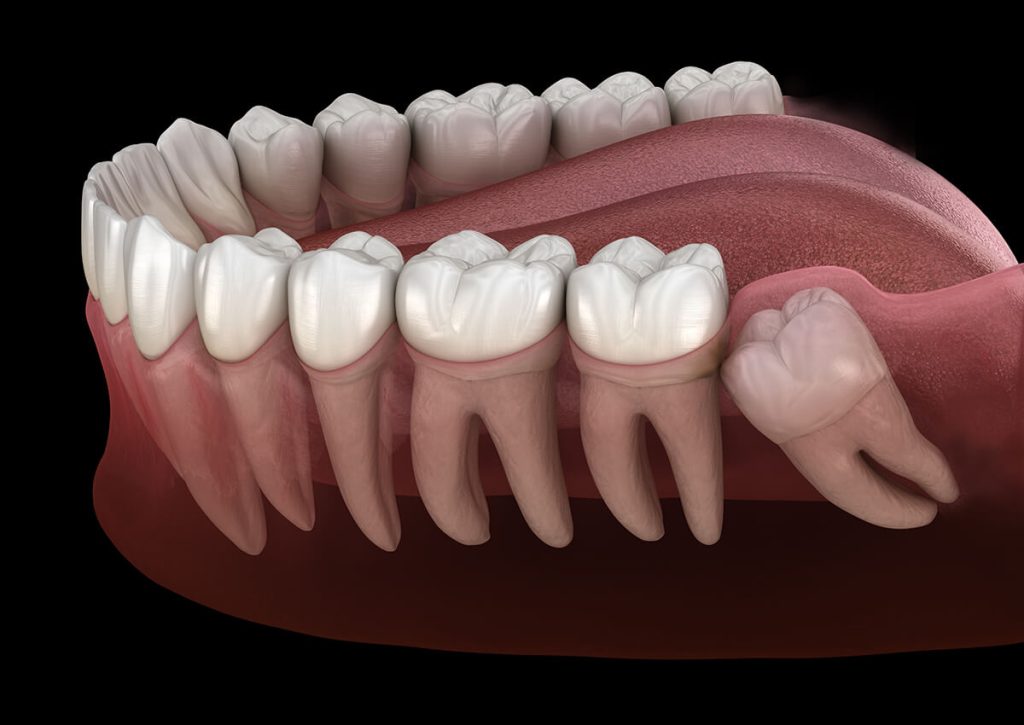
If your mouth lacks space for third molars to fully erupt, several problems can occur. Impacted wisdom teeth should ideally be removed before their roots fully develop. This can occur as early as age 12 or as late as the early twenties. Problems tend to increase after age 30. Reasons for removal include:
Pericoronitis, a localized gum infection, is common when there is not enough room for full eruption. It can cause pain, swelling, and difficulty with chewing or swallowing.
Fluid-filled cysts can develop around impacted teeth, slowly expanding and damaging adjacent bone and teeth. Rarely, tumors may also form.
Wisdom teeth may contribute to crowding, particularly in the lower front teeth, especially after braces.
Inadequate room for cleaning can lead to decay and gum disease in the second molars next to impacted wisdom teeth.
As you age, jaw bone density increases and wisdom tooth removal can be more complex with a longer recovery time. If your wisdom teeth are fully impacted and not causing problems, your surgeon may recommend monitoring them until intervention is necessary.
Sedation is commonly chosen for comfort. Anesthesia options will be discussed at your consultation. The surgery typically lasts 30 to 60 minutes, and you will be in the office for about 90 minutes. Local anesthesia is used following sedation to ensure comfort during recovery.
Do not eat or drink anything for at least 6 hours before surgery. Failure to follow these guidelines will result in rescheduling. Post-operative medications will help manage pain and swelling. A responsible adult must accompany you and remain with you for the rest of the day.
Have an adult accompany you and plan to stay with you post-surgery. Dissolvable stitches may be placed, and swelling or gum discomfort is normal for a few days. Start with clear liquids and slowly progress to soft foods. Avoid dairy products immediately post-surgery to reduce the risk of nausea. If you are prescribed antibiotics and take birth control pills, be aware that the pill’s effectiveness may be reduced.
The cost varies based on complexity and anesthesia type. A detailed estimate will be provided at your consultation. Our staff will assist with maximizing your insurance benefits.
Feel free to ask questions during your consultation or contact our office for additional support.
Do not eat or drink before surgery to reduce anesthetic complications.